Why Is Carpal Tunnel Worse at Night? Causes, Relief & What to Do
You fall asleep fine. Somewhere around 2am, you're jolted awake by a hand that's gone completely numb - or worse, a deep aching pain running from your wrist up your forearm. You shake it out, flex your fingers, maybe dangle your arm over the side of the bed. Eventually the feeling comes back. Then it happens again.
If this sounds familiar, you're experiencing one of the most common and most frustrating features of carpal tunnel syndrome: symptoms that are significantly worse at night. It's not your imagination, and it's not random. There are specific, well-understood reasons why carpal tunnel flares up while you sleep - and concrete things you can do about it.
"Why is carpal tunnel worse at night" is one of the hottest topics right now - and for good reason. Nocturnal symptoms are often what finally push people to take the condition seriously.
Why Carpal Tunnel Gets Worse at Night
Carpal tunnel syndrome is caused by compression of the median nerve as it passes through the carpal tunnel in your wrist. Several things happen during sleep that increase this compression and amplify your symptoms.
1. You sleep with your wrists bent
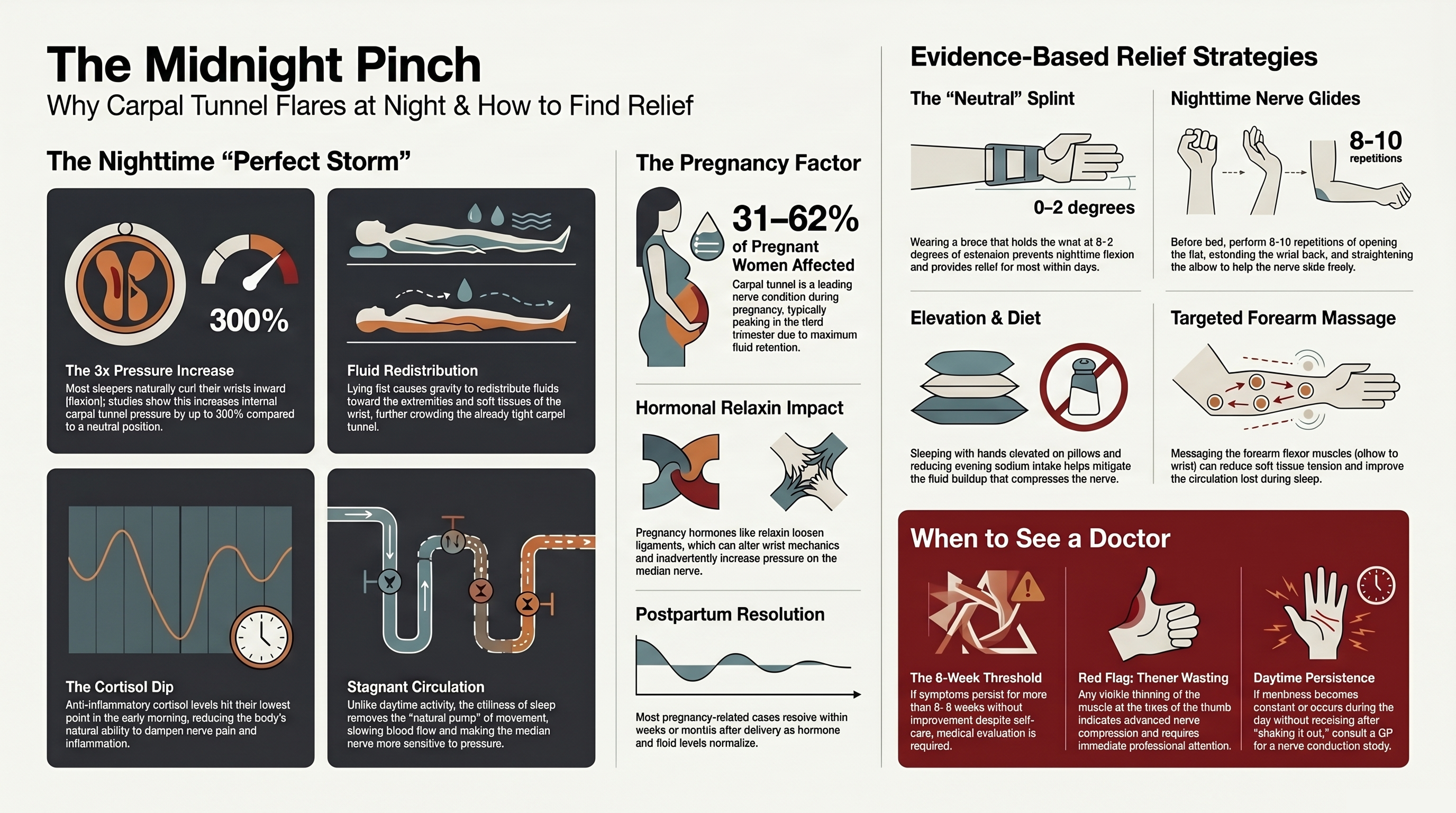
Most people naturally curl their wrists inward while sleeping - tucking hands under a pillow, sleeping in the foetal position, or simply relaxing into a flexed position. Wrist flexion significantly increases pressure inside the carpal tunnel. Studies have measured up to a threefold increase in carpal tunnel pressure when the wrist is held in a flexed position compared to a neutral one.
With your wrist bent for hours at a time, the median nerve is under sustained compression - leading to the numbness and tingling that wakes you up.
2. Fluid redistribution during sleep
When you're upright during the day, gravity helps draw fluid downward and away from your extremities. When you lie down, fluid redistributes more evenly throughout your body - including into the soft tissues around the carpal tunnel. This additional fluid increases pressure in an already tight space, compressing the median nerve further.
This is why carpal tunnel symptoms are often at their worst in the early hours of the morning, after you've been lying down for several hours, rather than immediately when you get into bed.
3. Reduced movement means reduced circulation
During the day, the natural movement of your hands and wrists helps maintain blood flow and keeps tissues from becoming too compressed. At night, the stillness of sleep removes that natural pump. Circulation to the hand slows, and the nerve becomes more sensitive to compression as a result.
4. Lower cortisol levels reduce your pain threshold
Cortisol — your body's natural anti-inflammatory hormone — follows a daily rhythm, reaching its lowest point in the early morning hours. With less cortisol in your system, your body's natural ability to dampen pain and inflammation is reduced, making you more sensitive to the nerve compression that's been building overnight.
The combination of bent wrists, fluid redistribution, reduced circulation, and lower cortisol creates a perfect storm for nocturnal carpal tunnel symptoms — even in people whose daytime symptoms are mild.
Carpal Tunnel During Pregnancy: Why It's So Common at Night
If you're pregnant and experiencing severe nighttime hand numbness and pain, you're far from alone. Carpal tunnel syndrome is one of the most common nerve conditions during pregnancy, affecting an estimated 31–62% of pregnant women — and nighttime symptoms tend to be particularly intense.
Why pregnancy makes carpal tunnel worse
Fluid retention — pregnancy causes significant fluid retention throughout the body, which increases soft tissue swelling around the carpal tunnel and compresses the median nerve
Hormonal changes — elevated levels of relaxin and other pregnancy hormones cause ligaments to loosen, which can alter wrist mechanics and increase carpal tunnel pressure
Weight gain — increased body mass puts more overall pressure on nerves and joints
Sleeping positions — as pregnancy progresses, sleep positions become more restricted, often forcing wrist flexion
Pregnancy-related carpal tunnel typically peaks in the third trimester when fluid retention is at its highest, and most cases resolve within a few weeks to months after delivery as fluid levels normalise.
Pregnancy carpal tunnel relief
Because medications need to be carefully considered during pregnancy, most treatment focuses on conservative measures:
Wrist splints at night: keeping the wrist in a neutral position while sleeping is the single most effective intervention for nocturnal symptoms. Maternity-safe and recommended by most hand specialists.
Elevation: sleeping with your hands slightly elevated on a pillow can help reduce fluid accumulation in the wrists overnight.
Cold compresses: applying a cold pack to the wrist for 10–15 minutes before bed can reduce local inflammation.
Gentle hand exercises: nerve glides and wrist stretches help maintain nerve mobility and reduce compression. These are safe during pregnancy and can significantly reduce symptom severity.
Reducing sodium intake: less sodium means less fluid retention, which reduces the pressure contributing to your symptoms.
If symptoms are severe, a doctor may recommend a corticosteroid injection, which is considered safe during pregnancy when necessary. Always discuss any treatment with your obstetrician or midwife.
What Actually Helps: Relief for Nighttime Carpal Tunnel
Wrist splinting - the most evidence-backed intervention
A wrist splint worn at night holds your wrist in a neutral position, preventing the flexion that causes pressure to build in the carpal tunnel. Multiple clinical studies have shown that consistent nighttime splinting reduces carpal tunnel symptoms significantly - with many patients reporting relief within days.
The splint should hold the wrist at roughly 0–2 degrees of extension (neutral, not bent back). Prefabricated splints are available without a prescription and work well for most people. Wear it every night for at least 3–4 weeks to assess effectiveness.
Hand massage and self-mobilisation
Massage and manual therapy of the hand and forearm can reduce soft tissue tension, improve circulation, and provide meaningful short-term relief from carpal tunnel pain.
What works:
Gentle massage along the forearm flexor muscles, from elbow toward the wrist
Thumb pressure along the palm, away from the wrist crease
Circular massage around the wrist joint itself
Vibrating massage tools on low settings applied to the forearm (not directly over the carpal tunnel)
Massage alone won't resolve carpal tunnel syndrome, but used alongside splinting and exercise it can meaningfully reduce symptom burden — particularly the stiffness and aching that lingers in the morning.
Nerve glide exercises before bed
Nerve glides — also called neural mobilisations — are gentle movements that encourage the median nerve to slide freely through the carpal tunnel. Done before sleep, they can reduce the likelihood of the nerve becoming sensitised overnight.
A basic median nerve glide: start with your elbow bent, hand in a loose fist. Slowly open the fingers, extend the wrist back, straighten the elbow, and turn your palm upward. Hold 5 seconds, return to start. Repeat 8–10 times per hand. This can be done sitting on the edge of the bed before you lie down.
Sleep position adjustments
Keep arms straight rather than curled under pillows
Place a pillow under your forearms to keep wrists elevated and neutral
Avoid sleeping on your hands
If you're a side sleeper, keep the lower arm extended rather than bent at the wrist
Reducing evening fluid intake and sodium
While you shouldn't restrict fluids significantly, avoiding high-sodium meals in the evening can reduce overnight fluid retention in the wrist tissues. This is particularly relevant for pregnant women and people who notice symptoms correlate with diet.
When Nighttime Symptoms Mean You Need More Than Self-Care
Nighttime carpal tunnel symptoms are uncomfortable but manageable for most people in the early stages. However, some signs indicate you should seek medical evaluation rather than continuing to self-manage:
Symptoms that persist during the day and don't resolve with shaking your hand out
Numbness that has become constant rather than intermittent
Weakness in your grip or difficulty with fine motor tasks
Symptoms that have been present for more than 6–8 weeks without improvement
Any wasting or thinning of the muscle at the base of your thumb
A GP can refer you for nerve conduction studies to confirm the diagnosis and assess severity. Treatment options beyond splinting include corticosteroid injections and, for persistent or advanced cases, carpal tunnel release surgery — a straightforward day procedure with a high success rate.
Track Your Nighttime Symptoms
One of the most useful things you can do is start logging when symptoms occur, how severe they are, and what seems to correlate with better or worse nights. Patterns that feel random often become clear within a week or two of consistent tracking — and that data is genuinely useful when you see a doctor.
CarpalCare is a free hand health app that includes a pain journal, guided hand exercises (including nerve glides), and the ability to generate a doctor-ready PDF report from your symptom data. It takes under a minute to log a night's symptoms, and over time the weekly analytics give you a clear picture of whether things are improving or progressing.
Available free on iOS and Android. No account needed to get started.
Your hands deserve better than another broken night's sleep. Start paying attention — and start doing something about it.
Frequently Asked Questions
Why does carpal tunnel hurt more at night than during the day?
Because sleep combines several factors that amplify nerve compression: bent wrists, fluid redistribution when lying down, reduced circulation, and lower cortisol levels. Together these create significantly higher pressure in the carpal tunnel than most people experience during normal daytime activity.
How do I stop carpal tunnel pain at night?
The most effective intervention is a wrist splint worn during sleep, which holds the wrist in a neutral position and prevents the flexion that increases carpal tunnel pressure. Nerve glide exercises before bed, sleeping with arms elevated, and avoiding high-sodium evening meals can also help reduce symptom severity.
Is carpal tunnel during pregnancy permanent?
In the vast majority of cases, no. Pregnancy-related carpal tunnel syndrome is caused largely by fluid retention and resolves within weeks to months of delivery as hormone and fluid levels return to normal. A small percentage of women do experience persistent symptoms postpartum, in which case the same treatment options available outside of pregnancy apply.
Can a hand massager help carpal tunnel?
Massage can provide meaningful short-term relief by reducing forearm muscle tension and improving local circulation. It works best as part of a broader approach that includes splinting and exercise, rather than as a standalone treatment. Apply massage to the forearm rather than directly over the carpal tunnel, and use gentle to moderate pressure.
When should I see a doctor about nighttime carpal tunnel symptoms?
If symptoms have persisted for more than 6–8 weeks, are getting progressively worse, include daytime numbness that doesn't resolve, or are affecting your grip strength, see a GP or hand specialist. Early treatment significantly improves outcomes and expands your options beyond surgery.