Carpal Tunnel Syndrome Symptoms: Signs, Causes & When to Get Help
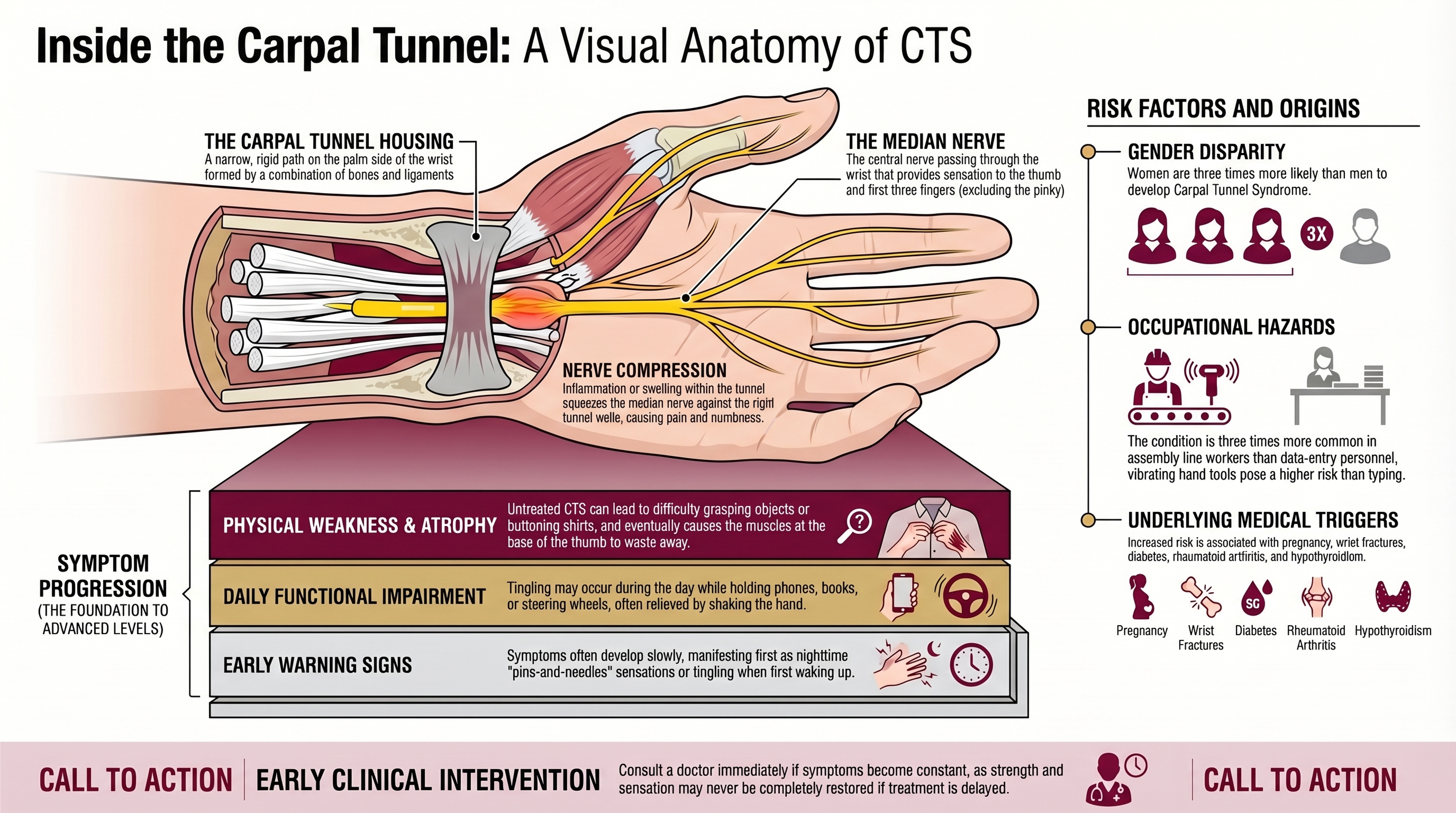
That tingling in your fingers at the end of a long day. The numbness that wakes you up at 3am. The hand that feels weaker than it used to. These aren't just signs of tiredness — they could be symptoms of carpal tunnel syndrome, one of the most common nerve conditions affecting people who work with their hands every day.
In this guide, we cover everything you need to know about carpal tunnel syndrome symptoms: what they feel like, how they progress, which symptoms are early warning signs, and when it's time to stop managing and start treating.
Searches for 'symptoms of carpal tunnel' have risen 50% in the past three months. If you're here because something feels off with your hands, you're not alone.
What Is Carpal Tunnel Syndrome?
Carpal tunnel syndrome (CTS) is a condition caused by compression of the median nerve as it passes through the carpal tunnel — a narrow passage in your wrist made up of bones and ligaments. The median nerve controls sensation in your thumb, index finger, middle finger, and part of your ring finger, as well as the muscles at the base of your thumb.
When the tissue surrounding this tunnel becomes inflamed — through repetitive movement, prolonged pressure, or other factors — it squeezes the nerve. Over time, this compression causes the numbness, tingling, pain, and weakness that characterise carpal tunnel syndrome.
It's the most common entrapment neuropathy in the world, and it's highly treatable — especially when caught early.
Symptoms of Carpal Tunnel Syndrome
Carpal tunnel symptoms vary depending on how far the condition has progressed. Most people experience a mix of the following:
1. Numbness and tingling
This is the most reported symptom of carpal tunnel syndrome. You'll typically feel it in the thumb, index finger, middle finger, and half of the ring finger — the areas supplied by the median nerve. The little finger is usually not affected, which can help distinguish CTS from other conditions.
The tingling often comes and goes at first. Many people notice it during activities that involve holding something for an extended period — a phone, a steering wheel, a book — or when they wake up in the morning.
2. Nocturnal symptoms
Waking up with numb or tingling hands is one of the most distinctive early signs of carpal tunnel syndrome. It happens because we tend to sleep with our wrists bent, which increases pressure in the carpal tunnel. Shaking your hand out or dangling it over the side of the bed often brings temporary relief — a response so characteristic that doctors sometimes use it as a diagnostic indicator (it's called the 'flick sign').
3. Pain in the wrist and hand
Carpal tunnel pain typically starts in the wrist and can radiate up the forearm toward the elbow, or down into the fingers. It's often described as a dull ache or burning sensation. Some people experience sharp, shooting pain during certain movements. The pain tends to be worse at night and after prolonged hand use.
Pain alone doesn't confirm carpal tunnel syndrome — there are other conditions that cause wrist and hand pain — but in combination with numbness and tingling in the median nerve distribution, it's a strong indicator.
4. Weakness in grip and pinch strength
As carpal tunnel syndrome progresses, the muscles at the base of the thumb (the thenar muscles) can weaken due to sustained nerve compression. You might notice:
Difficulty unscrewing lids or opening jars
Dropping objects unexpectedly
Struggling to pinch small items between thumb and finger
Feeling clumsy with fine motor tasks
Weakness tends to develop after symptoms have been present for some time. If you're experiencing significant weakness alongside numbness, it's important to see a doctor sooner rather than later.
5. A sensation of swelling that isn't visible
Many people with carpal tunnel syndrome describe a feeling that their fingers are swollen or puffy, even when there's no visible swelling. This is a neurological phenomenon caused by disruption to normal nerve signalling and is a commonly overlooked early symptom.
6. Reduced sensitivity to temperature and touch
Over time, sustained compression of the median nerve can reduce sensitivity in the affected fingers. You may find it harder to feel differences in texture or temperature, or notice that light touch feels dulled. This is a sign of more advanced nerve involvement and should prompt a medical evaluation.
Early vs Advanced Symptoms: How Carpal Tunnel Progresses
Carpal tunnel syndrome rarely appears fully formed. It typically develops in stages:
Early stage
Intermittent tingling or numbness, especially at night or first thing in the morning
Symptoms that resolve with shaking or repositioning the hand
No persistent weakness or sensitivity loss
Moderate stage
More frequent numbness that occurs during daytime activities
Mild weakness or clumsiness in the hand
Pain extending into the forearm
Symptoms that are slower to resolve
Advanced stage
Constant numbness with reduced sensation
Visible wasting of the thenar muscles at the base of the thumb
Significant weakness affecting daily tasks
Symptoms that no longer resolve on their own
The earlier you identify and address carpal tunnel symptoms, the wider your treatment options and the better your outcome. Early-stage CTS can often be managed without surgery.
Signs of Carpal Tunnel vs Other Conditions
Not every numb hand is carpal tunnel syndrome. A few conditions share similar symptoms and are worth being aware of:
Cervical radiculopathy — nerve compression in the neck that can cause numbness and tingling down the arm. Unlike CTS, symptoms often include the whole hand including the little finger, and may be accompanied by neck pain.
Cubital tunnel syndrome — compression of the ulnar nerve at the elbow, which causes symptoms in the ring and little finger (the opposite side from CTS).
Peripheral neuropathy — often related to diabetes, this causes widespread nerve symptoms throughout the hands and feet rather than the specific median nerve pattern seen in CTS.
Thoracic outlet syndrome — compression of nerves or blood vessels between the collarbone and first rib, causing symptoms in the arm and hand that can mimic CTS.
A clinical evaluation — and sometimes a nerve conduction study — is the most reliable way to confirm a carpal tunnel syndrome diagnosis and rule out other causes.
What Causes or Worsens Carpal Tunnel Symptoms
Several factors are known to increase the risk of developing carpal tunnel syndrome or worsen existing symptoms:
Repetitive hand and wrist movements — typing, assembly work, gaming, playing instruments
Prolonged wrist flexion or extension — common in desk work and sleeping positions
Pregnancy — fluid retention can increase pressure in the carpal tunnel
Diabetes — associated with increased nerve vulnerability
Thyroid conditions — hypothyroidism is linked to CTS
Obesity
Rheumatoid arthritis and inflammatory conditions
Previous wrist fracture or injury
Many people with carpal tunnel syndrome have a combination of occupational and biological risk factors. Understanding your triggers can help you make changes that reduce symptom severity.
Can Carpal Tunnel Be Cured?
Yes — carpal tunnel syndrome is treatable, and for many people, fully reversible. The approach depends on symptom severity and how long the condition has been present.
Conservative treatment (early to moderate CTS)
Wrist splinting, especially at night, to keep the wrist in a neutral position
Activity modification — reducing or restructuring tasks that aggravate symptoms
Hand and wrist exercises — including nerve glides and strengthening routines
Corticosteroid injections to reduce inflammation around the nerve
Ergonomic adjustments to workstation and equipment
Surgical treatment (moderate to advanced CTS)
Carpal tunnel release surgery is one of the most commonly performed hand surgeries. It involves cutting the transverse carpal ligament to relieve pressure on the median nerve. It has a high success rate and is typically done as a day procedure. Recovery involves physiotherapy and a gradual return to full hand use over several weeks.
Surgery is generally recommended when conservative treatment hasn't provided sufficient relief after several months, or when there are signs of significant nerve damage such as persistent weakness and muscle wasting.
Most people who address carpal tunnel syndrome early — before significant nerve damage — make a full recovery with conservative treatment alone.
When to See a Doctor
See a GP or hand specialist if:
Symptoms have been present for more than a few weeks
Numbness or tingling is constant rather than intermittent
You're experiencing weakness or dropping objects
Symptoms are getting progressively worse
Night-time symptoms are affecting your sleep
You've noticed any wasting of the muscles at the base of your thumb
A GP can refer you to a physiotherapist or hand specialist. Bringing a log of your symptoms — when they occur, how severe they are, what triggers them — can significantly speed up the diagnostic process and help your doctor make the right call.
Start Tracking Your Symptoms Today
Symptom tracking is one of the most useful things you can do between now and your doctor's appointment. Patterns that feel vague in memory become clear when they're logged over days and weeks — which hand, what time of day, what activity preceded the pain, how severe it was.
CarpalCare is a free app designed specifically for this. It includes a pain journal with visual hand mapping, guided hand exercises developed with hand health experts, and the ability to generate a doctor-ready PDF report from your symptom data. Available on iOS and Android, no account required.
Your hands do everything. Pay attention when they ask for help.
Frequently Asked Questions
What are the first signs of carpal tunnel syndrome?
The earliest signs are usually intermittent tingling or numbness in the thumb, index, and middle fingers — particularly at night or first thing in the morning. Many people also notice a feeling of swollen fingers even when no swelling is visible.
Where exactly does carpal tunnel hurt?
Carpal tunnel pain is typically felt in the wrist, palm, and the thumb side of the hand. It can radiate up the forearm toward the elbow. Pain in the little finger is not usually associated with carpal tunnel syndrome.
Can carpal tunnel go away on its own?
Mild carpal tunnel syndrome can improve with rest and activity modification. However, without treatment, symptoms tend to progress over time. Early intervention — splinting, exercises, ergonomic changes — gives the best chance of full recovery without surgery.
How do I know if it's carpal tunnel or something else?
The key distinguishing feature of carpal tunnel syndrome is that symptoms are limited to the thumb, index, middle, and part of the ring finger (the median nerve territory). If your little finger is affected, or symptoms extend up the arm from the neck, another condition may be responsible. A nerve conduction study can confirm the diagnosis.
Is carpal tunnel permanent?
Not if treated appropriately. When addressed early, carpal tunnel syndrome is often fully reversible. Advanced cases with significant nerve damage may result in some permanent reduction in sensation or strength, which is why early treatment matters.